Tulip Card Templates: 3D SVG Shapes Review
Evaluating Visual Impact for Spring Brand Campaigns
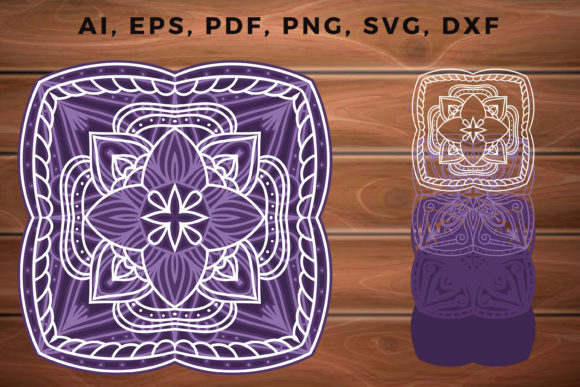
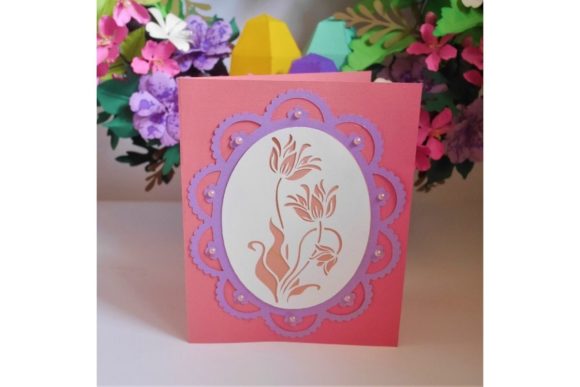
When reviewing Tulip Card Templates for a recent client project involving a boutique skincare line’s spring launch, my primary concern was balancing organic warmth with structural professionalism. As a graphic design asset, this collection immediately distinguishes itself through its dimensional quality. Unlike flat vector clipart that often feels sterile or overly digital, these templates utilize layered construction to create genuine depth. The mood is undeniably soft and inviting, evoking feelings of renewal and artisanal care. For brand owners and marketers targeting an audience that values handmade aesthetics, this visual language is potent. It avoids the generic look of standard stock shapes while maintaining enough geometric order to function within a cohesive brand identity system.
The first impression suggests versatility beyond simple greeting cards. While marketed as card templates, the underlying geometry serves as excellent modular elements for broader creative design applications. The tulip motif is stylized rather than botanical, making it suitable for modern design contexts where literal floral illustrations might feel too traditional or dated. This abstraction allows the asset to bridge the gap between crafty DIY projects and polished commercial design, a critical consideration when selecting assets for small business branding that needs to scale across multiple touchpoints.
Performance Across Packaging and Digital Touchpoints
In practical application, I tested these Tulip Card Templates across various media to assess their adaptability. For packaging design, specifically product labels and box sleeves, the 3D SVG format proved invaluable. The ability to manipulate individual layers meant I could adjust the petal spacing to accommodate variable text lengths without distorting the overall shape. This flexibility is rare in pre-made design bundles and significantly reduces production time. When applied to marketing visuals like Instagram posts and Pinterest pins, the dimensional aspect creates natural focal points that guide the eye, enhancing visual hierarchy without requiring aggressive color contrasts.
For Cricut users and those managing print-on-demand merchandise, the file structure is optimized for cutting machines. I verified that the nodes are clean and the layering logic is sound, which prevents the jagged edges often seen in poorly converted SVG designs. This makes it highly effective for sticker design, tote bags, and t-shirt design where physical material layers mimic the digital 3D effect. However, its utility extends into web design and editorial layouts as well. Used as a hero graphic or a recurring decorative accent on a blog or landing page, it adds texture that breaks up rigid grid systems. Content creators will find that these shapes work exceptionally well as frames for product photography or typography, providing a thematic container that reinforces seasonal messaging without overwhelming the core content.
Navigating Scale and Complexity in Commercial Layouts
Despite its strengths, this asset requires strategic placement. During my review, I noted that Tulip Card Templates perform best in large layout areas or as distinct supporting elements. They excel as hero graphics, packaging details, and themed collection anchors. However, designers must exercise caution when integrating them into crowded compositions or minimalist corporate materials. Because the design relies on shadow and layer separation to achieve its 3D effect, reducing it to very small sizes can cause the details to muddy. In low-contrast designs or against complex photographic backgrounds, the subtle dimensionality may be lost, rendering the shape flat and visually confusing.
This limitation directly impacts readability and professional perception. If used as a background element behind dense body copy, the varying opacity and overlapping shapes can reduce legibility, undermining user experience. Similarly, for brands with strict, ultra-modern identities, the inherent softness of the tulip form might clash with sharp, industrial typography. It is crucial to treat this asset as a complementary illustration rather than a foundational structural element in such cases. For Etsy sellers and digital product creators, this means clearly communicating recommended use cases to customers to prevent dissatisfaction when the asset doesn't translate well to tiny favicon sizes or dense data tables.
Technical Due Diligence for Professional Deliverables
Before committing Tulip Card Templates to a paid client deliverable, rigorous technical validation is non-negotiable. My standard workflow includes testing the asset in grayscale to ensure the 3D effect relies on value contrast, not just hue. This guarantees accessibility and ensures the design holds up in single-color printing scenarios like embossing or vinyl cuts. I also strongly recommend placing the shapes on real mockups before finalizing any concept; what looks dimensional on a white artboard may disappear against a textured paper stock or fabric substrate. Always verify the commercial license terms specifically for your intended use, especially if creating derivative products for sale in a creative marketplace.
- Vector Editability: Confirm that anchor points are minimal and curves are smooth to allow for easy recoloring and resizing without artifacting.
- Font Pairing Testing: Test the shapes against serif, sans-serif, script, and display fonts to identify which typographic voice complements the organic curves without competing for attention.
- Cross-Platform Compatibility: Verify performance in both Adobe Illustrator and Cricut Design Space/Silhouette Studio to ensure consistent results regardless of the software ecosystem.
- Print Quality Check: Run a test print at actual size to check for banding in gradients or misalignment in cut lines, particularly for sublimation design and physical card assembly.
- Transparency Inspection: If using PNG versions for Canva templates or web overlays, inspect edge quality to ensure no white halos remain from the export process.
Strategic Value for Seasonal and Artisanal Brands
Ultimately, Tulip Card Templates represent a high-value addition to a designer’s toolkit for specific niches. They solve a common problem in seasonal marketing: finding florals that feel fresh and constructed rather than painted and vintage. For handmade businesses, bloggers, and event planners, the included video tutorial and difficulty-easy rating lower the barrier to entry, allowing non-designers to achieve professional-looking results quickly. Yet, for experienced professionals, the true value lies in the clean vector architecture that permits deep customization.
When integrated thoughtfully, this asset enhances emotional appeal and audience engagement by adding tactile richness to digital and print mediums. It supports brand consistency by offering a repeatable visual motif that can be adapted across invitations, social media graphics, and product packaging. While it demands careful handling regarding scale and contrast, its ability to elevate a simple campaign into a cohesive sensory experience makes it a worthy investment. Whether you are launching a new product line or refreshing an existing identity for spring, these templates offer a sophisticated blend of playfulness and precision that resonates deeply with contemporary consumers seeking authenticity in their brand interactions.