Halloween Skull: A Designer’s Embroidery Review
As a professional embroidery designer and product reviewer, I approach every new asset with a critical eye toward production viability. When evaluating the Halloween Skull design for real-world application, my primary concern is not just its aesthetic appeal on a screen, but how it translates into physical stitches on fabric. This review breaks down the practical considerations for makers, Etsy sellers, and apparel decorators looking to integrate this specific illustration into their seasonal lineup.
First Impressions and Visual Personality
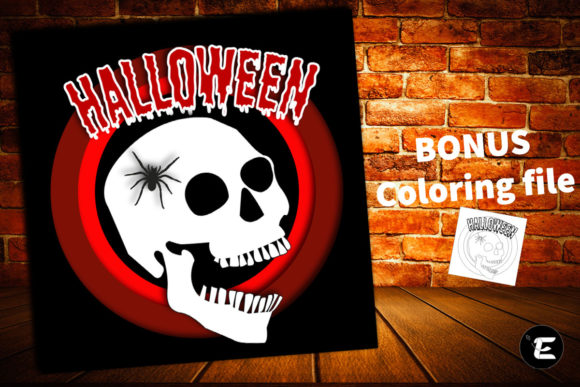
Upon opening the digital files, the Halloween Skull presents a distinct mood that balances festive tradition with modern graphic clarity. The visual personality of this design leans toward bold recognition rather than intricate realism, which is often a positive indicator for machine embroidery. In digital format, the lines appear clean and purposeful. For an embroidery project, this suggests that the digitizer has likely prioritized stitch flow over unnecessary complexity. The shape holds its own as a standalone motif, making it versatile enough for both spooky holiday embroidery and edgy year-round custom apparel.
The inclusion of multiple formats, including .SVG, .PNG, .PDF, and .EPS, indicates flexibility. While these are primarily vector and raster graphic formats rather than native machine embroidery files like .DST or .PES, they serve as excellent master assets. For commercial embroidery businesses, having high-quality source vectors allows for custom redigitizing tailored to specific fabric textures or hoop sizes without losing edge definition. This resizability is crucial when adapting the design from a large sweatshirt embroidery placement down to a smaller embroidered patch.
Real-World Application: The Custom Tote Bag Test
To truly judge the utility of Halloween Skull, I mentally placed it in a current client scenario: producing a run of canvas tote bags for a local boutique’s fall market launch. Canvas is a textured, medium-weight fabric that demands confident stitching. In this context, the design needs to read clearly from a distance while maintaining structural integrity during use.
For a tote bag design, the skull’s silhouette works exceptionally well because it avoids tiny, isolated details that might get lost in the canvas weave. If utilizing this as an applique design, the bold outer edges would allow for a secure satin stitch border that encapsulates the fabric cleanly. Alternatively, if executed entirely in thread, the fill stitch areas should be dense enough to cover the natural grain of the canvas without becoming bulletproof. This balance is what separates a professional finished product from a hobbyist attempt. Customers at craft fairs expect merchandise that feels substantial; a design that sinks into the fabric or looks sparse reduces perceived value.
Fabric Compatibility and Placement Strategy
While the Halloween Skull is versatile, material selection dictates success. On stable fabrics like denim, twill, or canvas, the design will perform predictably. However, caution is required for stretchy fabrics commonly used in baby embroidery or lightweight t-shirts. Because skulls often contain solid fill areas, the stitch density can cause puckering on knits if the proper stabilizer is not used. I recommend testing on scrap fabric first, specifically using a cut-away stabilizer for any garment that will be washed frequently.
Dark fabrics present another consideration. High contrast is key for Halloween themes. If stitching white or neon thread on black cotton, ensure the underlay is sufficient to prevent the dark fabric from bleeding through the top stitches. Conversely, on light fabrics, verify that the thread colors provide enough saturation. For small shop products intended for sale, always compare light and dark fabric backgrounds before finalizing your color palette. What looks vibrant in a printable mockup may require adjustment once needle meets thread.
Critical Considerations for Small Details and Hoop Sizes
One area where designers must exercise judgment is scaling. Although the source file is resizable without quality loss digitally, physical embroidery has limits. Reducing the Halloween Skull below 3 inches requires careful inspection. Tiny lettering or decorative accents within the skull may need to be removed or simplified to prevent thread breaks and poor registration. Satin stitch columns narrower than 1mm can become problematic, leading to tunneling or fraying.
When working with curved surfaces like caps, the design layout matters significantly. A tall, vertical skull may distort on the curved brim area. It is often better to use this design centered on the front panel or flattened slightly to accommodate the cap's radius. Always confirm your hoop size before purchasing or digitizing; knowing whether the design fits your 4x4, 5x7, or multi-needle hoop prevents wasted time and materials. For those creating personalized gifts where space is limited, such as baby bibs or sleeve cuffs, consider isolating just the cranium or jawline elements if the full composition is too dense.
Commercial Viability and Brand Consistency
For Etsy sellers and creative entrepreneurs, consistency builds trust. Using Halloween Skull across multiple product types—matching sweatshirts, tea towels, and nursery decor—creates a cohesive collection. However, brand consistency also means technical reliability. A customer who buys a pillow cover and later returns for an apron expects the same stitch quality. This requires standardizing your thread colors, tension settings, and stabilizer choices across all items featuring this design.
Furthermore, understanding licensing is non-negotiable for commercial embroidery. Before listing any finished product or digital embroidery file derived from these assets, confirm the usage rights. Can you sell the physical item? Can you modify the vector to create your own proprietary stitch file? Clarifying these terms protects your business and ensures ethical practice. Professionalism extends beyond the stitch count; it encompasses legal compliance and transparent communication with buyers regarding care instructions for dense embroidery designs.
Designer Notes for Production Success
Based on my evaluation, here are actionable steps for integrating this design into your workflow:
- Test Stitching: Never skip the test run. Use a piece of fabric identical to your final project to check stitch density and registration.
- Mockup Verification: Utilize the provided .PNG and .SVG files to create accurate printable mockups for listings, but remember that digital rendering does not show thread texture. Supplement with photos of actual samples.
- Stabilizer Selection: Match stabilizer weight to fabric stability. Use tear-away for stable wovens and cut-away for knits or high-density fills.
- Thread Contrast Check: View your thread selection under natural lighting. Artificial shop lights can deceive the eye regarding color vibrancy against dark backgrounds.
- Detail Audit: If resizing for small hoops, manually inspect corners and internal features. Simplify running stitch outlines if they risk disappearing at smaller scales.
- Licensing Review: Document your commercial rights before launching marketing campaigns for holiday embroidery collections.
The Halloween Skull offers strong potential for makers willing to apply technical diligence. Its bold geometry suits a wide range of handmade products, from boutique apparel to seasonal home goods. By respecting the relationship between digital art and physical fabrication, you can transform this illustration into a profitable, high-quality asset for your creative business. Whether you are crafting a unique personalized gift or stocking inventory for the autumn rush, let practical testing guide your needle.